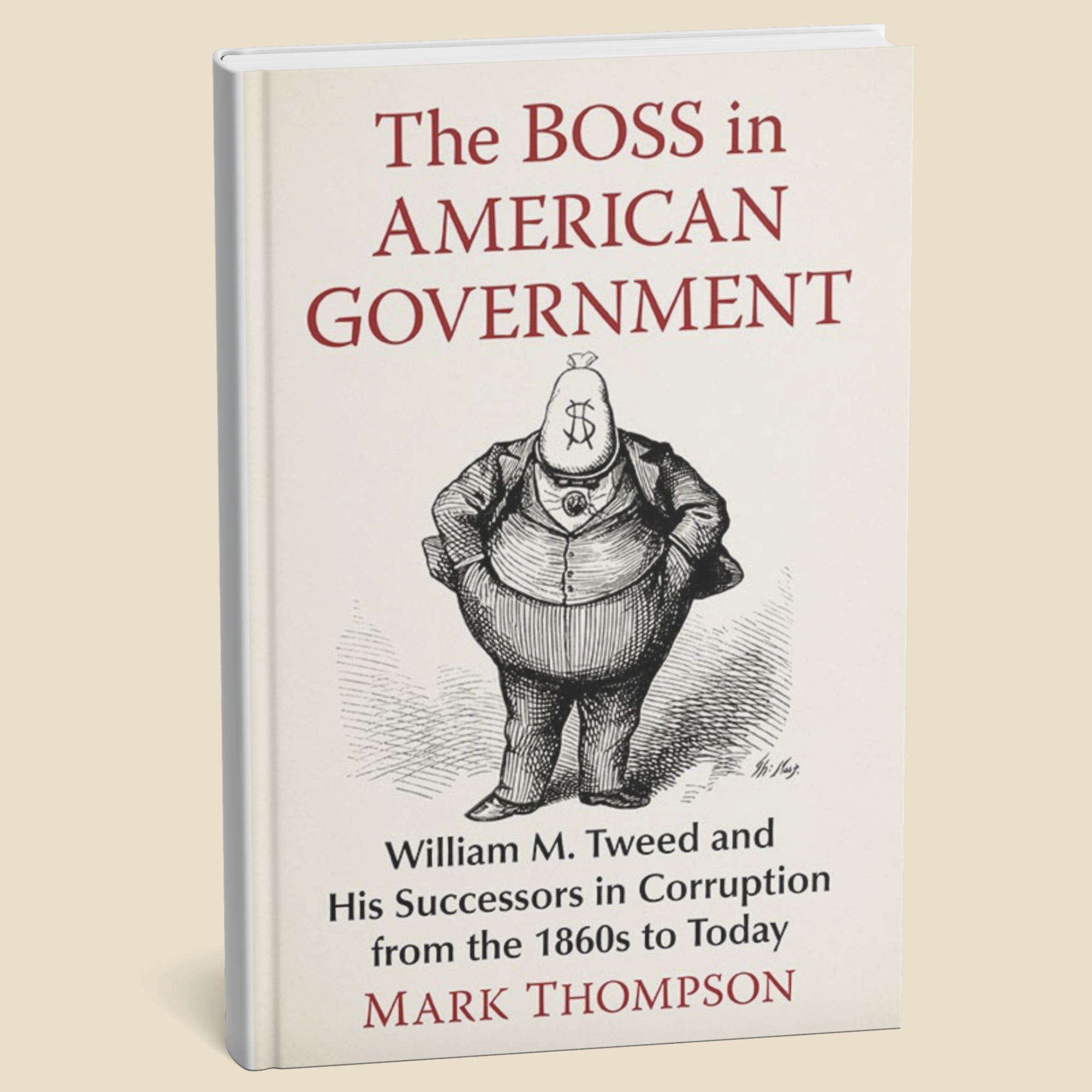
The Boss in American Government: William M. Tweed and His Successors in Corruption from the 1860s to Today
Who really runs a city? In New York between 1863 and 1871, the answer was William M. Tweed and his close associates—men who treated the municipal government as a private business and its treasury as their personal account. The machine they built, known then and since remembered as the "Tweed Ring," turned graft into a system: elections were bought, newspapers and legislators were paid both to support Ring actions and to look away from Ring crimes. By the time it was ousted, the Ring had caused economic harm estimated at at least $200 million --$5 billion in today's money -- to the city and its citizens. Tweed had himself stolen upwards of $20 million. He would die behind bars, broke and broken, at fifty-five.
The techniques Tweed pioneered have outlived him by more than a century and a third, surfacing time and again in American politics and government.