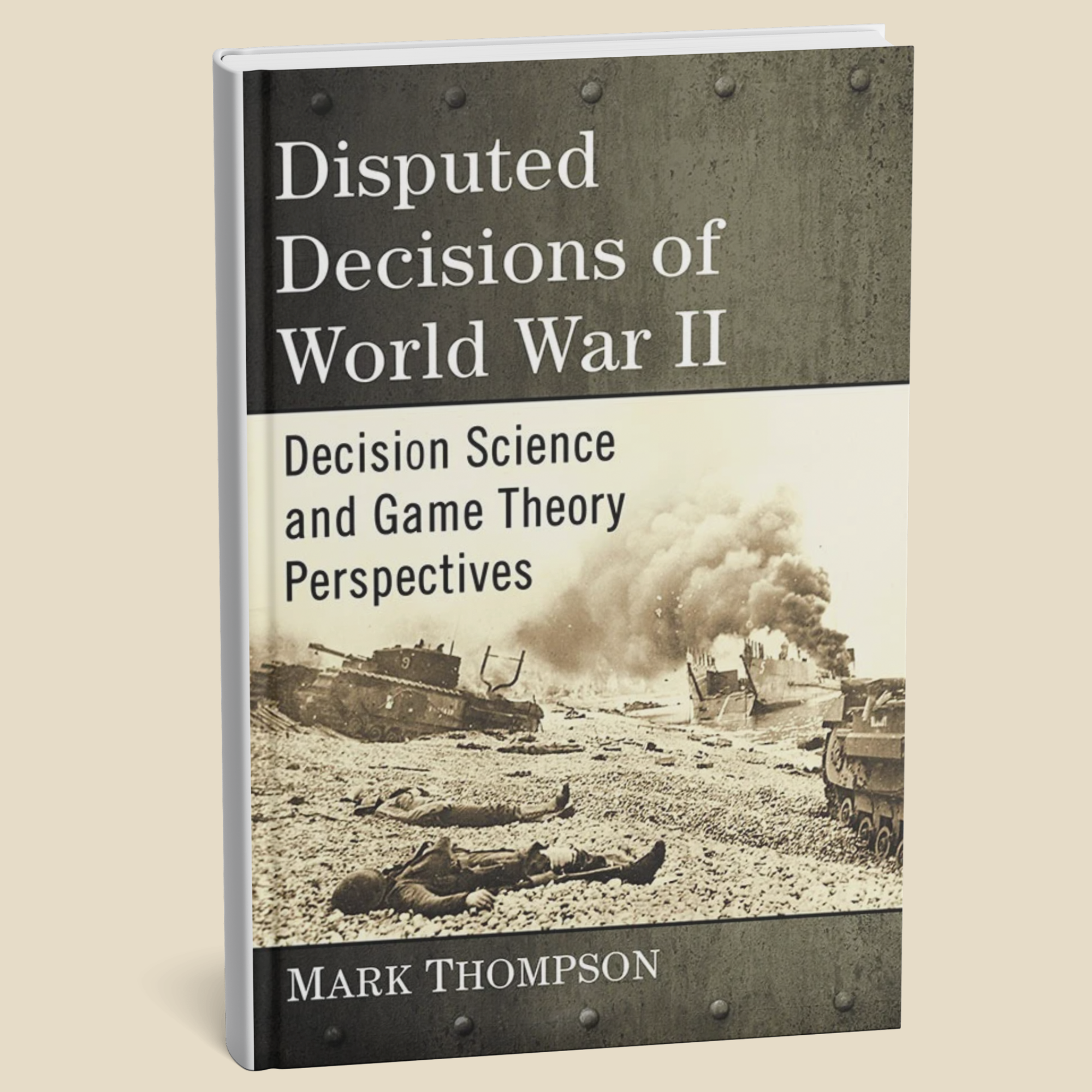
Disputed Decisions of World War II: Decision Science and Game Theory Perspectives
Great commanders can still make poor decisions about decisions themselves. This is the domain of meta-decision making: not the choice on the battlefield but the prior, hidden choice of how that choice gets made. On four occasions, the Allies got it wrong in instructive ways.
At Dieppe in August 1942, a single division was thrown against the French coast in Operation Jubilee, and a closed circle of planners marched in lockstep toward disaster: groupthink in its purest form. The invasion of North Africa that November exposed a different flaw, the planning fallacy, as commanders on both sides of the Atlantic convinced themselves victory would come easily. Sicily, the following summer, revealed a third: a casual disregard for unity of command, the oldest principle in warfare and one decision science has only reaffirmed. And then Anzio, January 1944, where two-plus divisions went ashore in a landing that a clearer grasp of bluffing - of when a threat is real and when it is theater - might have rendered unnecessary altogether.